A tarnish resistant personalized name necklace can be a meaningful piece of jewelry, but personalization is only one part of choosing a necklace for everyday wear.
Material, plating, water exposure, skin comfort, craftsmanship, and proper care can all influence how jewelry looks over time.
At Engravely Jewelry, we believe shoppers should understand these details before ordering customized jewelry. This guide explains seven important things to check when comparing personalized necklaces, especially if you are looking for jewelry designed for regular wear.
If you are currently comparing styles, you can also browse our personalized name necklaces and other custom jewelry designs.
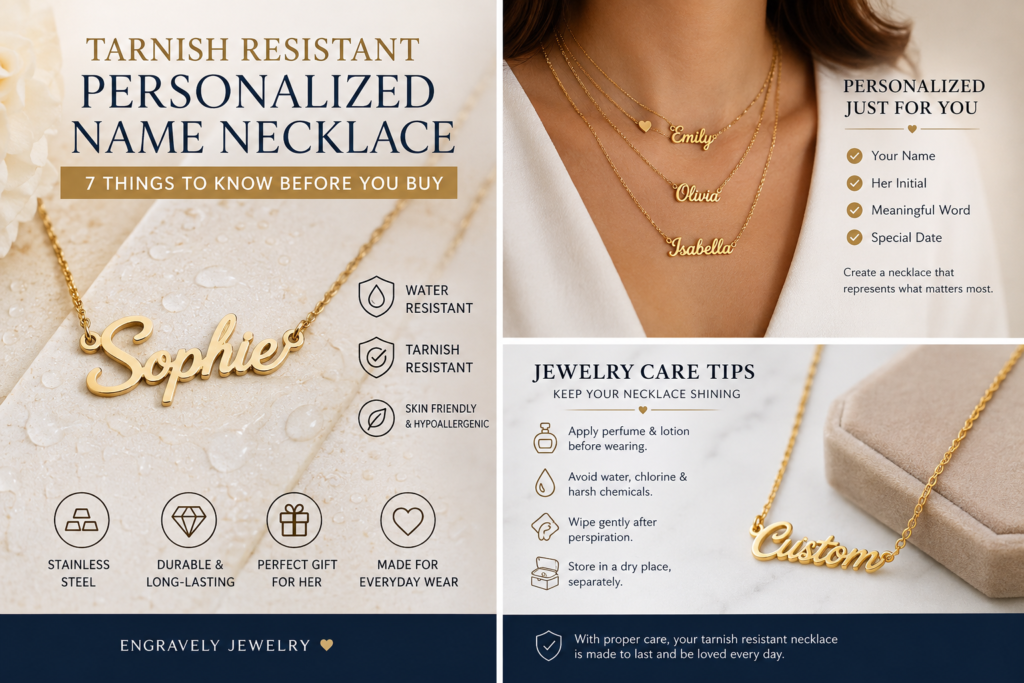
Table of Contents
- What Is a Tarnish Resistant Personalized Name Necklace?
- Why Stainless Steel Matters
- Is Tarnish Resistant Jewelry Waterproof?
- What About Sensitive Skin?
- Why Tarnish Resistance Matters for Personalized Jewelry
- How to Keep Your Necklace Looking Its Best
- What to Check Before Buying
- Personalized Gold Name Necklaces
- Old English Initial Necklaces
- Personalized Jewelry as a Gift
- Frequently Asked Questions
1. What Is a Tarnish Resistant Personalized Name Necklace?
A tarnish resistant personalized name necklace is designed using materials or finishes that help reduce discoloration and oxidation during normal use.
The important word is resistant.
“Tarnish resistant” does not necessarily mean jewelry will remain completely unchanged under every possible condition.
Jewelry can be affected by:
- Moisture
- Sweat
- Perfume
- Lotion
- Cosmetics
- Chlorine
- Salt water
- Cleaning chemicals
- Storage conditions
- Frequency of wear
This is why shoppers should look beyond simple claims such as “non-tarnish” and check the actual material and finish.
What Does Non-Tarnish Jewelry Really Mean?
The phrase “non-tarnish” is often used to describe jewelry designed to resist discoloration better than some traditional fashion-jewelry materials.
However, a more realistic expectation is tarnish resistance rather than permanent immunity from all surface changes.
Even a well-made tarnish resistant personalized name necklace benefits from appropriate jewelry care.
The U.S. Federal Trade Commission’s Jewelry Guides emphasize accurate representation of jewelry materials, metallic content, durability, and other product characteristics. You can read the official FTC Jewelry Guides for more information.
2. Why Stainless Steel Matters
Stainless steel is commonly used in modern personalized jewelry because it combines durability, structural strength, and corrosion resistance.
That makes it particularly suitable for customized pieces such as:
- Name necklaces
- Initial necklaces
- Old English letter necklaces
- Nameplate pendants
- Personalized charm necklaces
A stainless steel personalized name necklace can be a practical option for customers who want customized jewelry designed for frequent use.
Why the Base Metal Is Important
Not every gold-colored necklace is made from solid gold.
Many affordable personalized necklaces use stainless steel or another base metal with a gold-tone plated finish.
Before buying, check whether the seller clearly identifies:
- Base metal
- Plating or coating
- Jewelry color
- Finish
- Care instructions
- Nickel information when available
Clear material information is more useful than vague phrases such as “premium metal.”
You can explore additional personalized jewelry styles to compare different designs and finishes.
3. Is a Tarnish Resistant Personalized Name Necklace Waterproof?
Many shoppers search for a waterproof personalized name necklace, but “waterproof” and “water resistant” should not automatically be treated as the same claim.
Unless a product has specific testing or manufacturer documentation supporting a waterproof claim, water resistant is usually the more cautious description.
A water-resistant necklace may tolerate common everyday moisture such as:
- Light rain
- Small splashes
- Humidity
- Normal perspiration
However, repeated exposure to chlorine, salt water, shampoo, soap, or strong cleaning chemicals can affect some plated finishes over time.
Can You Shower With a Personalized Name Necklace?
That depends on the material and finish.
Even when the necklace uses stainless steel as its base, repeated contact with shampoo, soap, hard water, and other chemicals may affect plated surfaces.
For a gold plated personalized name necklace, removing the necklace before swimming or prolonged showering can help preserve its appearance.
4. What About Sensitive Skin?
Many customers search for a hypoallergenic personalized name necklace because they want jewelry that feels comfortable against the skin.
However, “hypoallergenic” should be used carefully.
Individual reactions can vary depending on:
- Nickel exposure
- Metal composition
- Plating condition
- Skin chemistry
- Perspiration
- Length of skin contact
People with known metal allergies should check the actual material composition rather than relying only on marketing terminology.
What Should Sensitive-Skin Shoppers Check?
Look for information about:
- Base metal
- Nickel content
- Plating
- Surface coating
- Manufacturer specifications
The American Academy of Dermatology notes that nickel is a common cause of allergic contact dermatitis and recommends carefully checking jewelry materials if you have a nickel allergy. See the American Academy of Dermatology’s nickel allergy guidance.
If you already know you react to a specific metal, exact product specifications are more useful than general phrases such as “skin friendly.”
5. Why Tarnish Resistance Matters More for Personalized Jewelry
Personalized jewelry can carry emotional value that ordinary fashion jewelry does not.
A custom necklace might represent:
- Your own name
- Your partner’s initial
- Your child’s name
- A family member
- A nickname
- A meaningful word
- An important memory
Because of that emotional connection, durability matters.
A tarnish resistant personalized name necklace is often purchased with the expectation that it will become part of someone’s regular jewelry collection.
That makes material transparency especially important.
For customers who prefer a more personal style, our personalized necklace collection includes name, initial, and statement necklace designs.
6. How to Help a Personalized Necklace Keep Its Finish
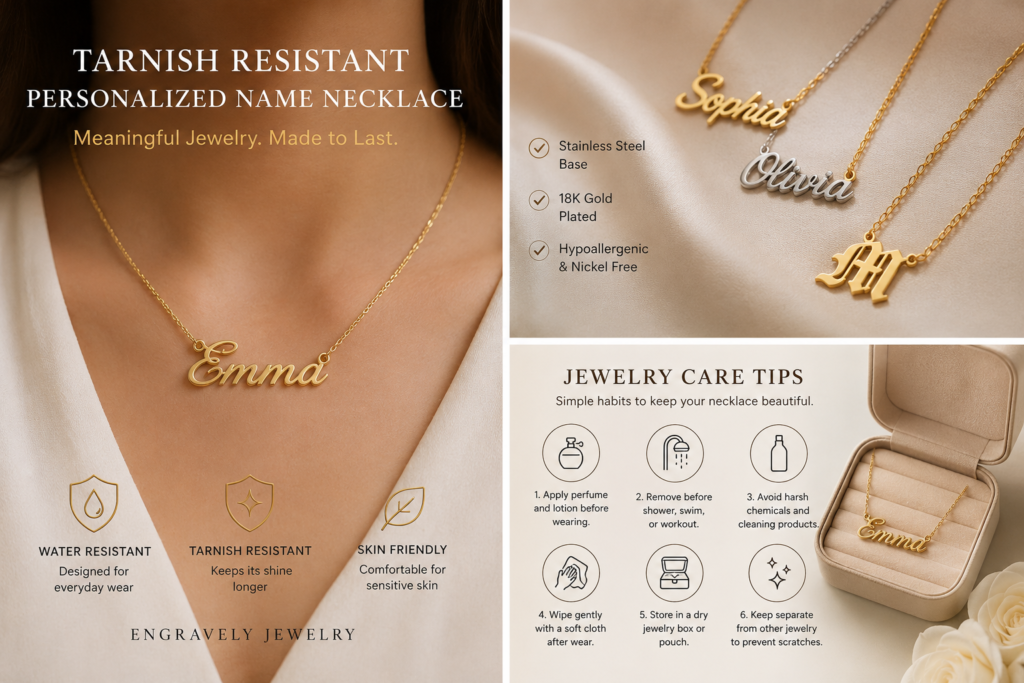
Proper care can help preserve the appearance of personalized jewelry.
We recommend these general habits:
- Apply perfume and lotion before putting on your necklace.
- Avoid spraying cosmetics directly onto the jewelry.
- Remove plated jewelry before swimming.
- Limit exposure to chlorine and household cleaning chemicals.
- Wipe the necklace gently after heavy perspiration.
- Store jewelry in a clean, dry location.
- Keep necklaces separated to help reduce scratching.
- Avoid abrasive polishing products on plated surfaces.
How Should You Store Personalized Jewelry?
When you are not wearing your necklace, keep it separately in a jewelry pouch or box.
A dry storage environment can reduce unnecessary moisture exposure while helping prevent the chain and pendant from rubbing against harder jewelry pieces.
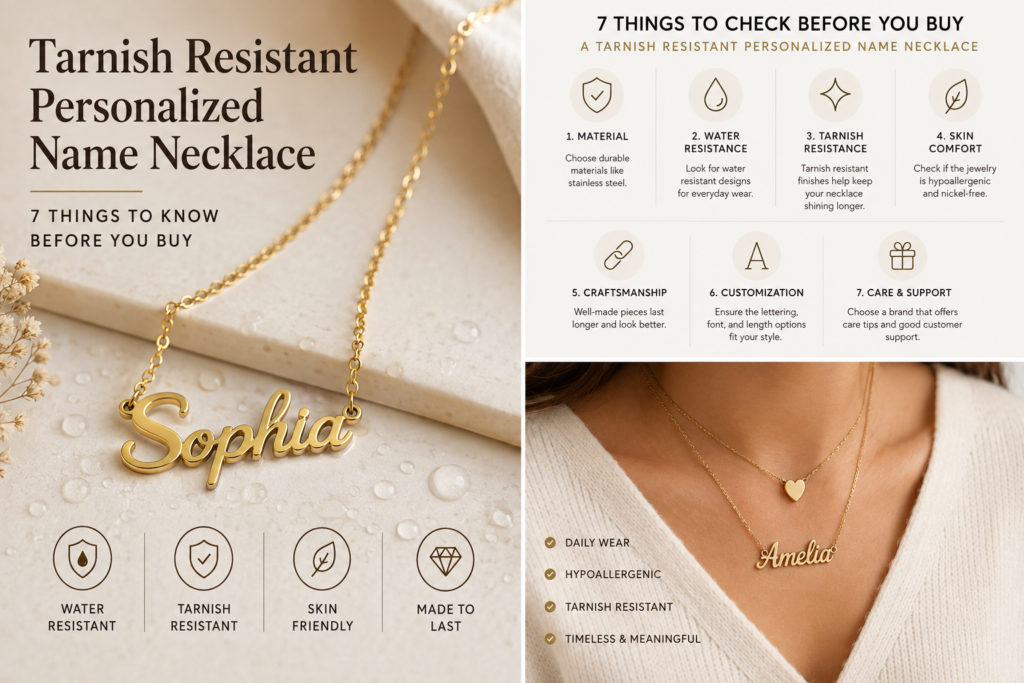
7. What Should You Check Before Buying?
Before purchasing a tarnish resistant personalized name necklace, ask the following questions.
What Is the Necklace Made From?
Look for a clearly stated base material.
Descriptions such as “metal” or “premium material” are less useful than an exact material specification.
Is the Necklace Plated?
If the necklace is gold-colored, check whether the product is:
- Solid gold
- Gold plated
- PVD coated
- Gold-tone finished
- Another type of surface treatment
Does the Seller Explain Water Resistance?
A trustworthy product page should provide realistic information about normal moisture, showering, swimming, and chemical exposure.
Is Material Information Available for Sensitive Skin?
If metal sensitivity is important to you, exact composition matters.
Are Jewelry Care Instructions Provided?
Care information helps customers understand how to maintain the jewelry properly.
Are Clear Product Photos Available?
Look for close-up photographs showing:
- Pendant surface
- Chain
- Finish
- Pendant proportions
- Necklace length
- Lettering details
Original product photography is especially useful because it helps shoppers evaluate the product beyond written descriptions.
Is the Customization Process Clearly Explained?
For customized jewelry, check:
- Character limit
- Font
- Capitalization
- Necklace length
- Material
- Color
- Production time
- Personalized-item return policy
Tarnish Resistant Gold Name Necklaces for Everyday Wear
Gold-tone personalized jewelry remains popular because it can work with a wide variety of outfits.
A gold tarnish resistant personalized name necklace can be worn with:
- Casual clothing
- Dresses
- Workwear
- Layered chains
- Evening outfits
- Everyday basics
However, color alone should not determine your purchase.
For frequent wear, also consider the base metal, plating method, care requirements, and expected exposure to moisture.
Old English Initial Necklaces
A full name necklace is not the only way to wear personalized jewelry.
An Old English initial necklace offers a smaller, bold alternative that can still carry personal meaning.
An initial might represent:
- Your first name
- Your surname
- Your partner
- Your child
- Someone important to you
Initial pendants can also work well in layered necklace combinations.
When comparing an Old English necklace, consider the same factors discussed throughout this guide: material, plating, tarnish resistance, water exposure, skin comfort, and proper care.
Browse our necklace collection to compare personalized name and initial necklace styles.
Is a Personalized Name Necklace a Good Gift?
Personalized jewelry can make a thoughtful gift because the design is connected directly to the recipient.
Popular occasions include:
- Birthdays
- Anniversaries
- Valentine’s Day
- Mother’s Day
- Christmas
- Graduation
- Bridesmaid gifts
- Gifts for girlfriends
- Gifts for wives
- Gifts for daughters
A custom name necklace gift for a girlfriend, for example, could feature her own name, nickname, initial, or a meaningful word.
If you are shopping for a celebration, explore our birthday jewelry gifts for more personalized gift ideas.
The personalization creates emotional value, while material quality and proper care determine how practical the jewelry can be for everyday wear.
How Engravely Jewelry Approaches Personalized Jewelry
At Engravely Jewelry, we believe customers should be able to understand what they are buying before placing a personalized order.
Product information should clearly explain important details such as:
- Material
- Finish
- Available colors
- Customization options
- Necklace length
- Production information
- Recommended care
We also believe phrases such as “water resistant,” “tarnish resistant,” and “skin friendly” should be used carefully and supported by accurate product information.
Rather than assuming every piece of jewelry performs identically, shoppers should consider the actual material and finish of each necklace.
Frequently Asked Questions
Does a Tarnish Resistant Personalized Name Necklace Never Tarnish?
Not necessarily.
Tarnish resistant means the jewelry is designed to resist discoloration, but plating, moisture, chemicals, environmental exposure, and care habits can still influence its long-term appearance.
Is Stainless Steel Good for Personalized Name Necklaces?
Stainless steel is commonly used because of its durability, strength, and corrosion resistance.
It can be particularly useful for customized pendants that require detailed cutting.
Is a Personalized Name Necklace Waterproof?
It depends on the individual product and finish.
Unless the seller or manufacturer provides evidence supporting a waterproof claim, it is more realistic to treat plated jewelry as water resistant.
Can I Wear a Personalized Necklace Every Day?
Many personalized necklaces can be suitable for frequent wear.
Reducing exposure to chlorine, harsh chemicals, perfume, and prolonged moisture may help preserve plated finishes.
Is Stainless Steel Good for Sensitive Skin?
Many people wear stainless steel comfortably, but individual sensitivities vary.
People with known metal allergies should review the exact material and nickel information before purchasing.
What Is the Best Way to Prevent a Name Necklace From Tarnishing?
Keep jewelry clean and dry, reduce unnecessary exposure to harsh chemicals, wipe it after heavy perspiration, and store it separately when not in use.
What Is the Difference Between Tarnish Resistant and Non-Tarnish Jewelry?
“Tarnish resistant” means the jewelry is designed to reduce or slow discoloration.
“Non-tarnish” is often used as a marketing term, but no jewelry should automatically be assumed to remain completely unchanged under every condition.
Final Thoughts
Choosing a tarnish resistant personalized name necklace involves more than selecting a name and color.
A good buying decision comes from understanding:
- Base material
- Plating
- Water resistance
- Tarnish resistance
- Skin comfort
- Customization
- Jewelry care
Personalized jewelry often carries emotional meaning, which makes accurate material information especially important.
Instead of choosing the product making the biggest durability claim, look for jewelry that clearly explains what it is made from, how it should be cared for, and what customers can realistically expect from everyday wear.
Author Information
Written by: Engravely Jewelry Team
Engravely Jewelry creates and curates personalized jewelry, including custom name necklaces, initial necklaces, and personalized gift styles. Our content is designed to help shoppers better understand jewelry materials, customization options, everyday wear, and care.
Last reviewed: August 2026
Editorial Approach
Our jewelry guides are created using available product specifications, material information, product photography, supplier information, recognized industry guidance, and practical jewelry-care recommendations.
We review durability and material-related wording carefully and avoid presenting terms such as “waterproof,” “hypoallergenic,” or “non-tarnish” as absolute guarantees unless appropriate product information supports those claims.